Nelson's Motif
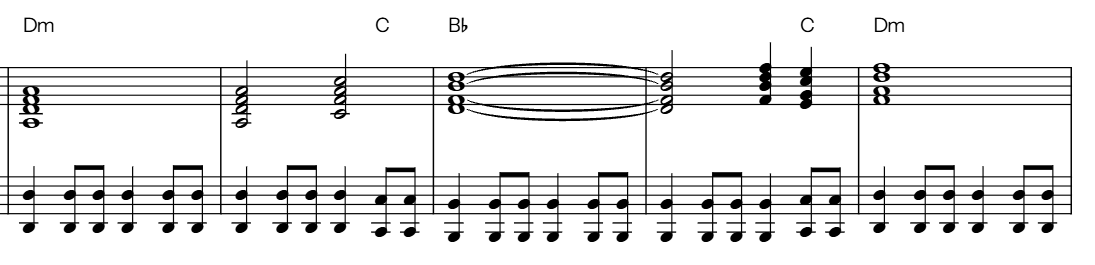
The admiral himself. Broad, held chords move D minor to C to B-flat and back home to D minor, while the bass pulses underneath in steady eighths. The theme stays on its feet and keeps moving, as Nelson did.
In the full score the theme most often runs D minor, F, B-flat, A, D minor, then G7 or C-sharp diminished. Its boldest statement comes in Movement IV at 2:08, as Nelson's plan wins the day.
D minori – III – VI – V – i – IV7or vii°
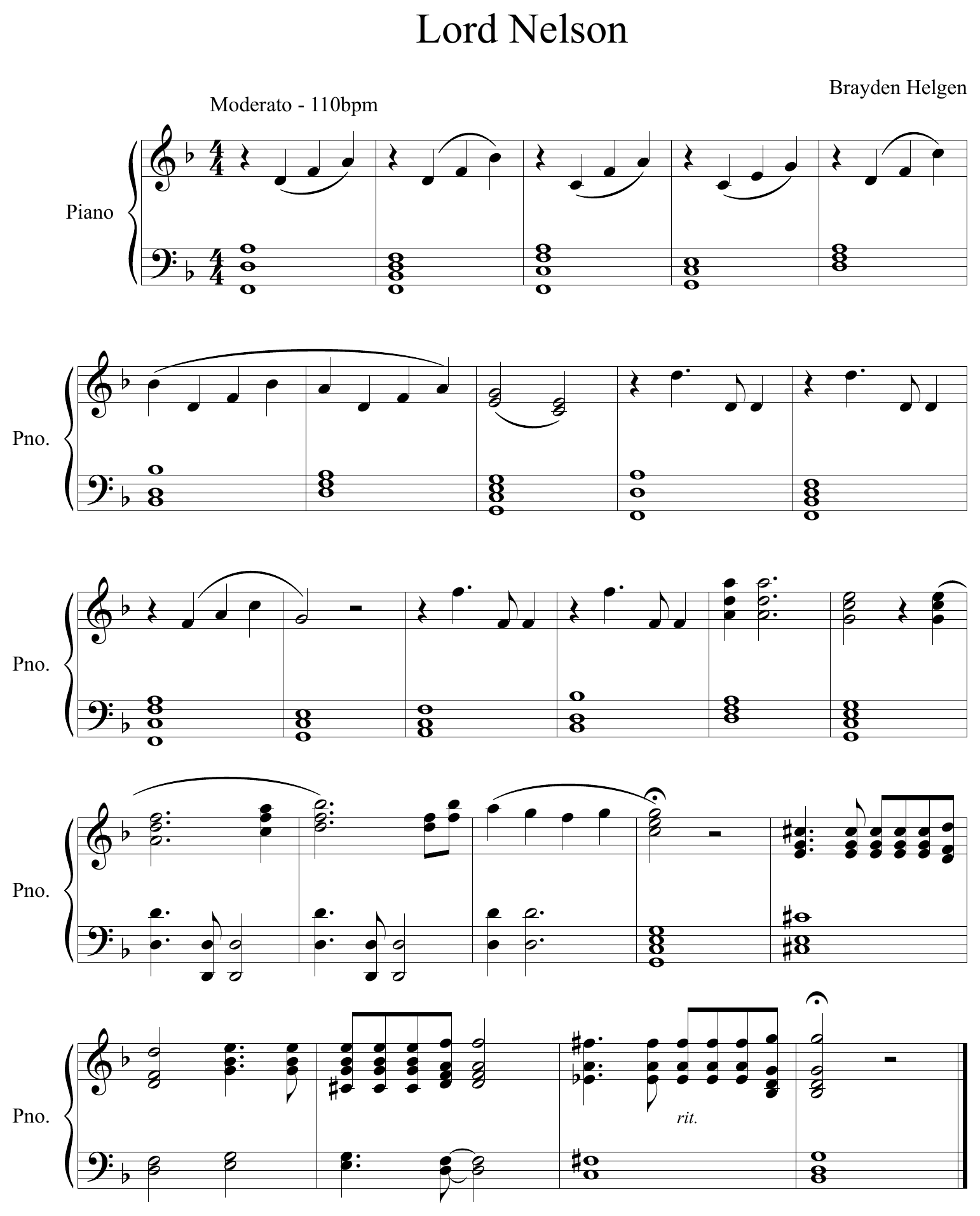
Full piano score: Lord Nelson
Moderato, 110 bpm. Bars 1–8 state the theme: a rising arpeggio in each bar, over D minor, B-flat, F and C, ending on A, the dominant. Bars 9–14 answer it with a falling-octave call. Bars 15–20 build to the climax, with broad chords over a D pedal that stop on a fermata. The last five bars are Eyes Set on England, which close on G minor.
The Crew's Theme & HMS Victory
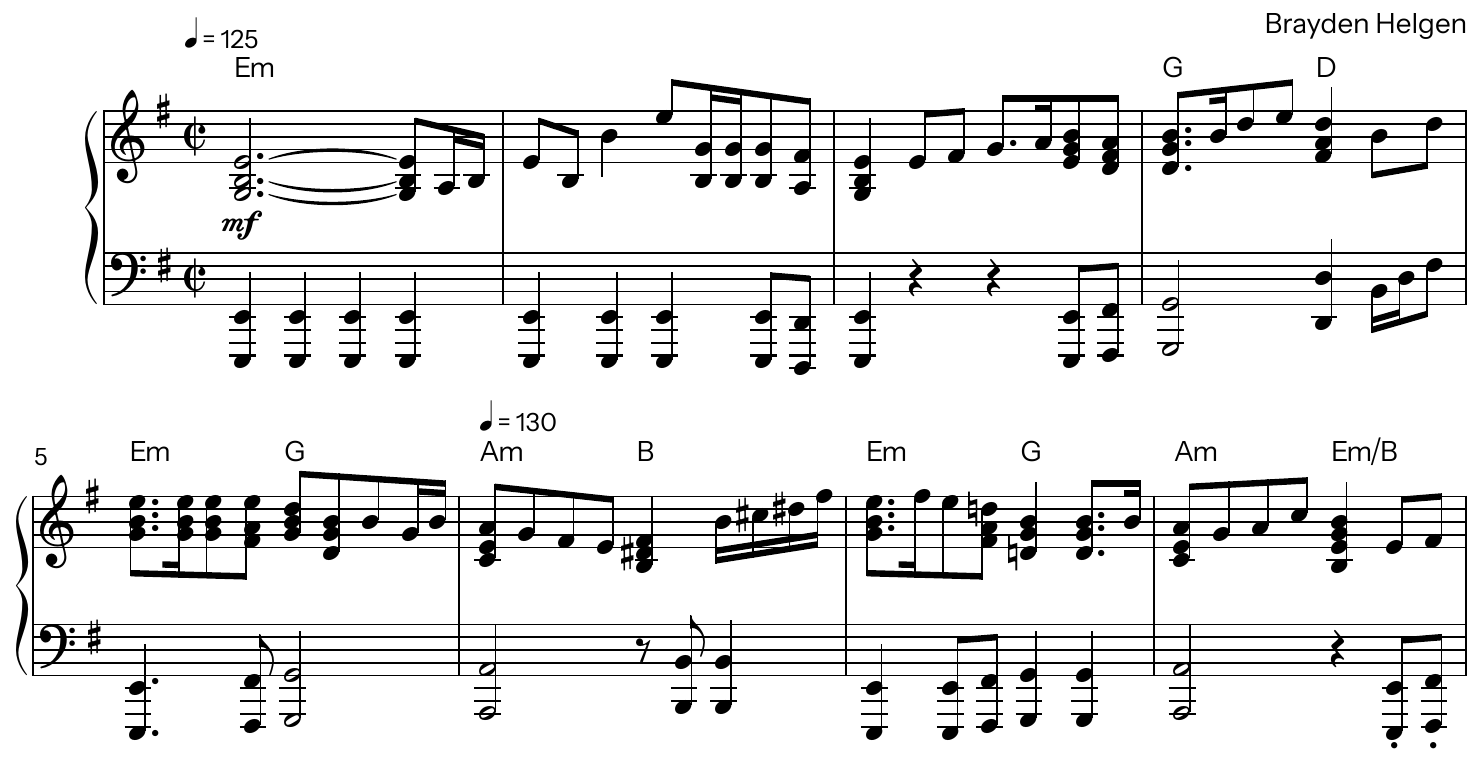
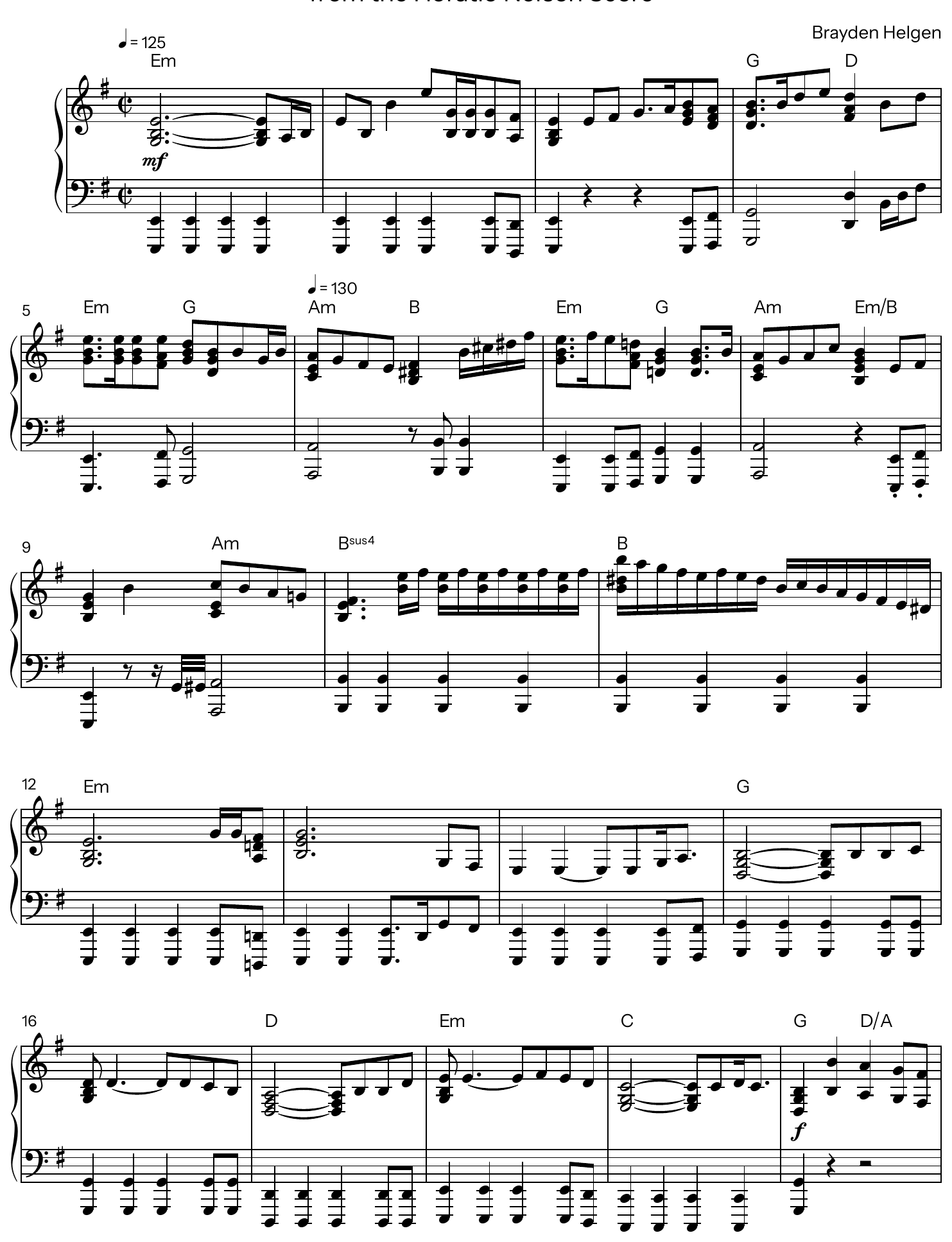
A shanty for the men who sailed and fought the ship, and for Victory herself. It is the only theme in the score that sounds like it could be sung on deck: a stamping cut-time tune in E minor that turns through G, D and C over a bass that never stops marching.
It carries Movement IV, where Victory fights on after Nelson falls. The tempo keeps pushing forward, from 125 to 130 and then 136. Late on, the tune climbs key by key, through G minor, A-flat, B-flat and C minor, and finishes in F minor.
E minor → F minorCut time♩ = 125–136
Full piano score: Shanty on the HMS Victory, page 1
The composer's first sketch of the shanty was in A major (A, E, F-sharp minor, D). The finished version sets it in E minor, darker and more driven.
Eyes Set on England
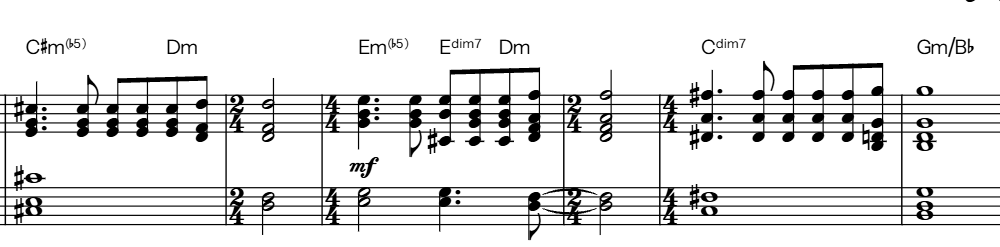
Built from Haydn's Missa in Angustiis, the “Nelson Mass” of 1798, which took Nelson's name after he heard it performed in 1800. Half-diminished and diminished chords lean again and again toward D minor, with shifting meters, before it settles on G minor.
After Haydn4/4 · 2/4mf
Sailing
The motion of the ships. A very simple ostinato of four notes, rooted in whatever the home key is: the root, then up a whole step, a half step and another whole step. In G minor that is G, A, B-flat, C, played as light staccato eighths over and over.
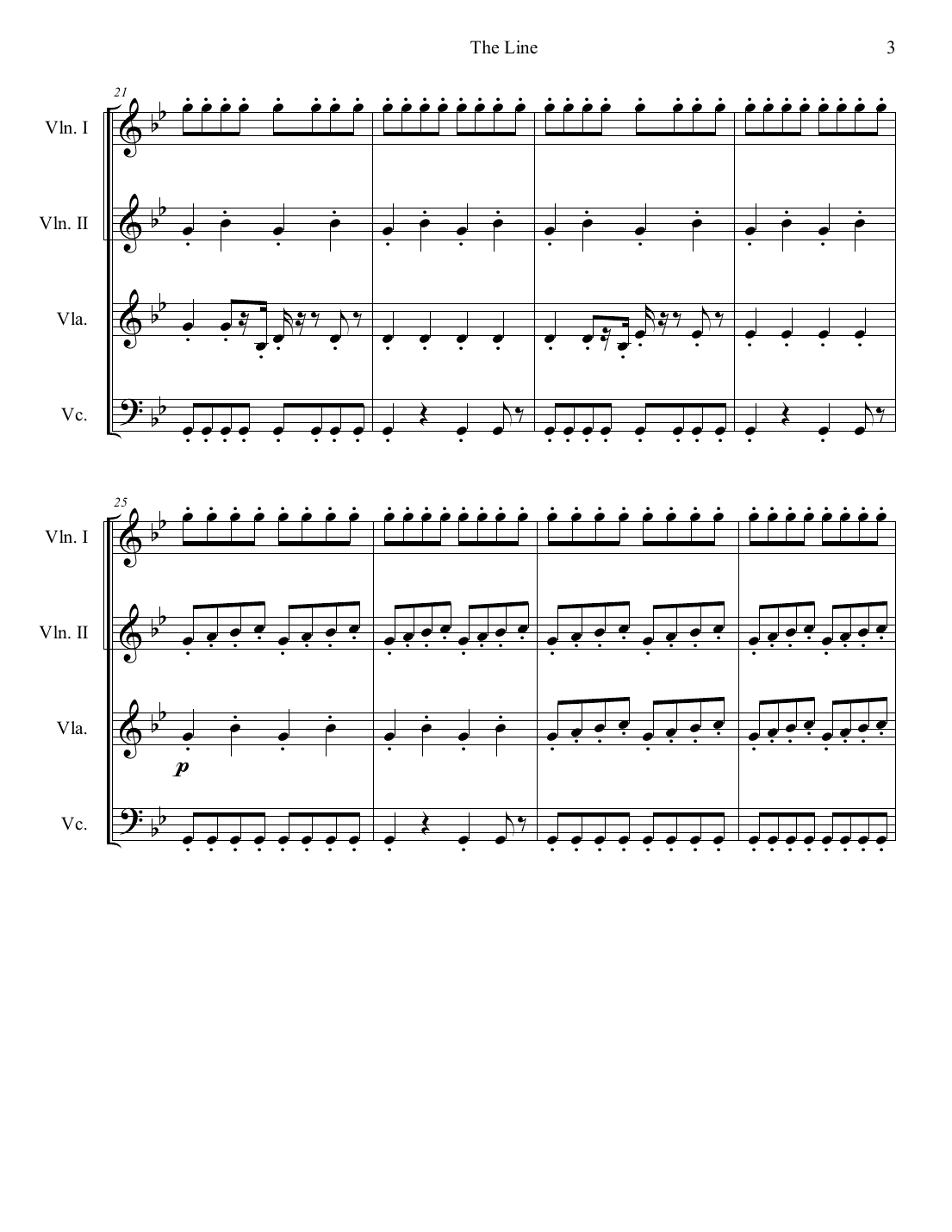
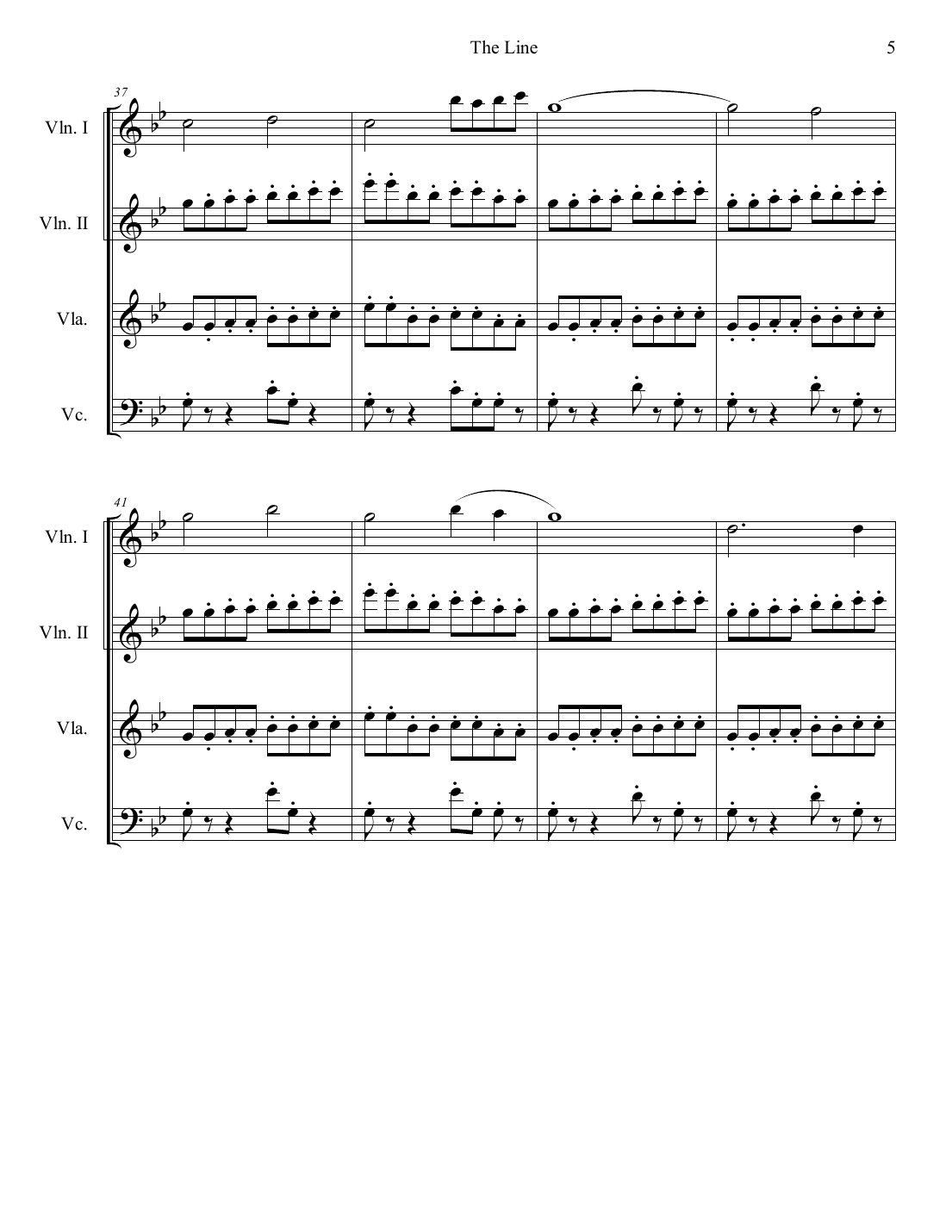
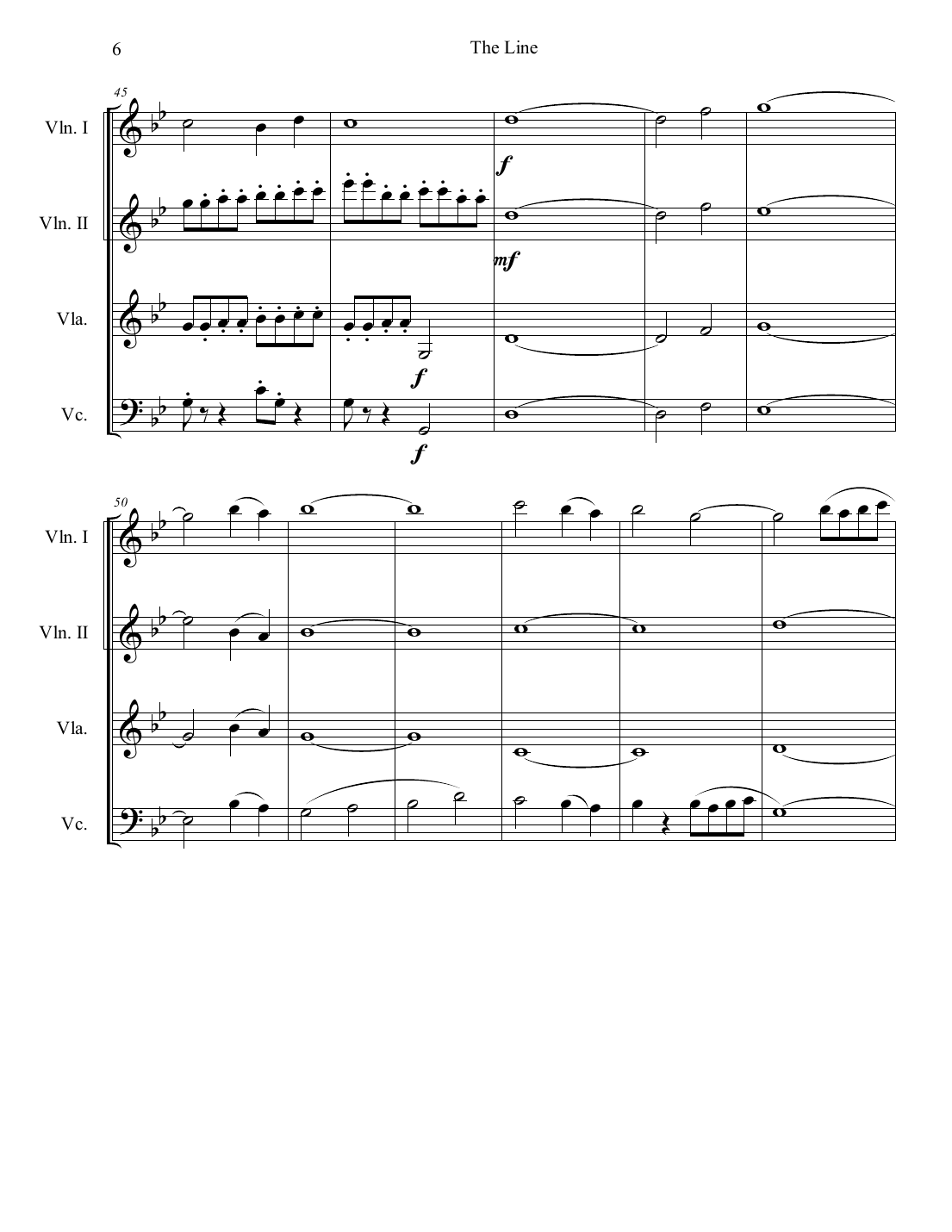
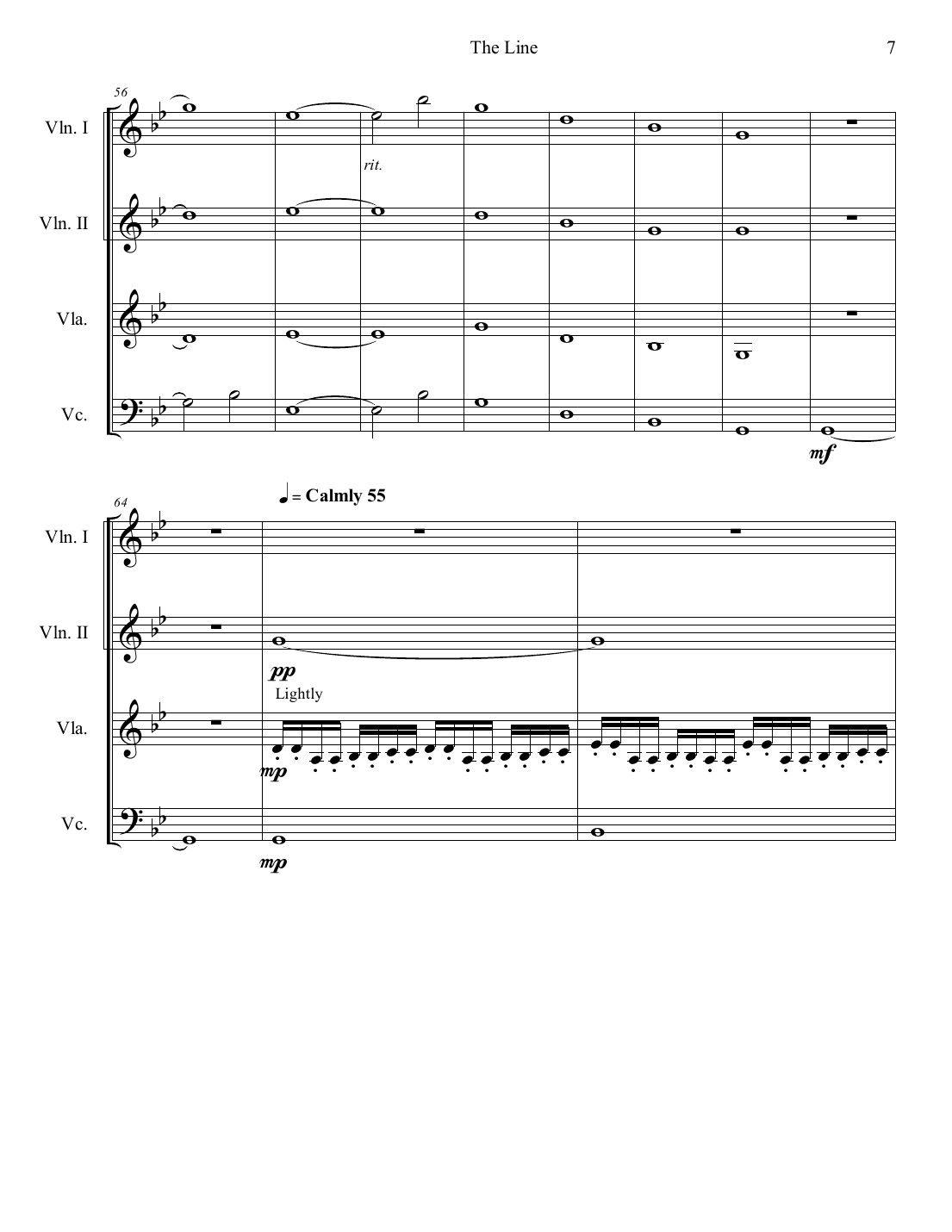
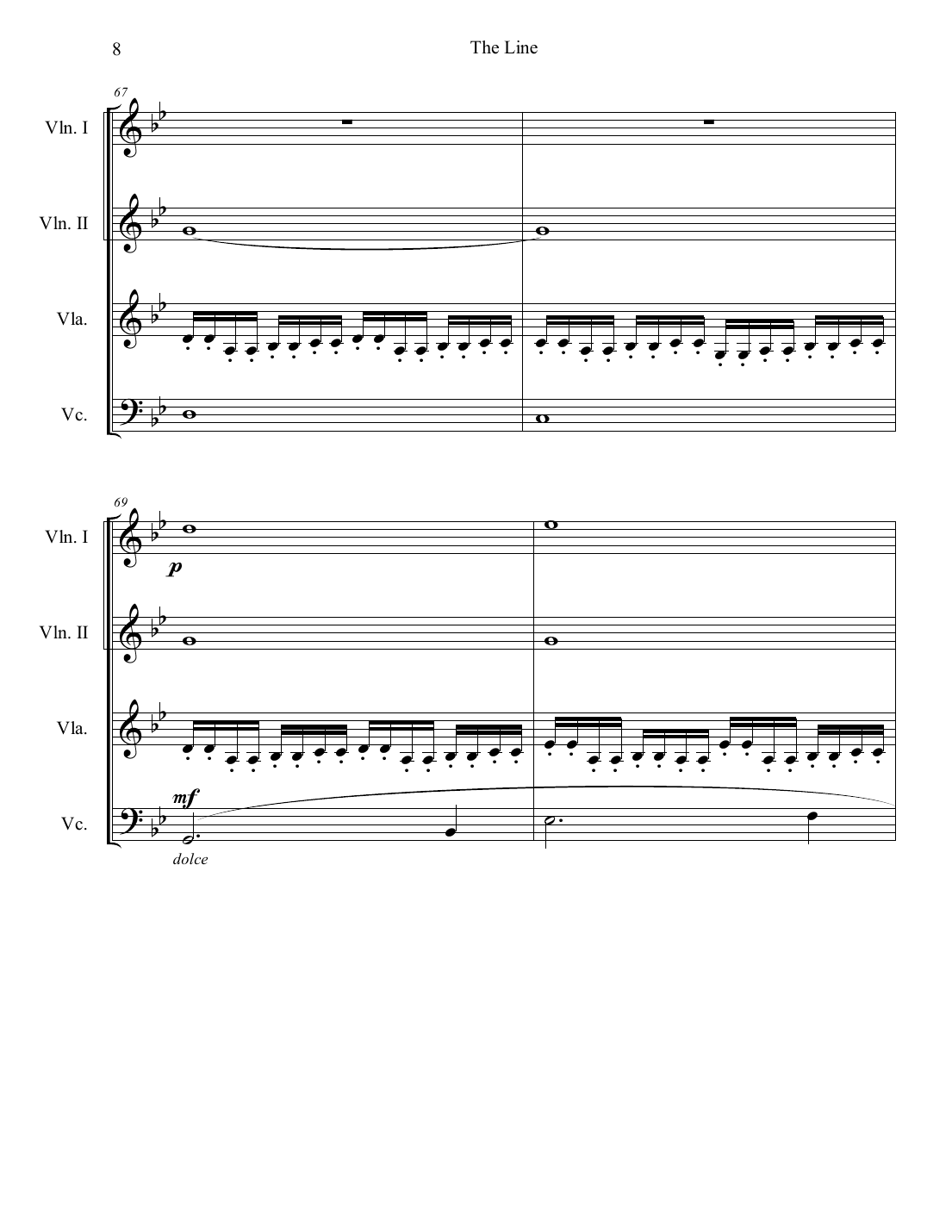
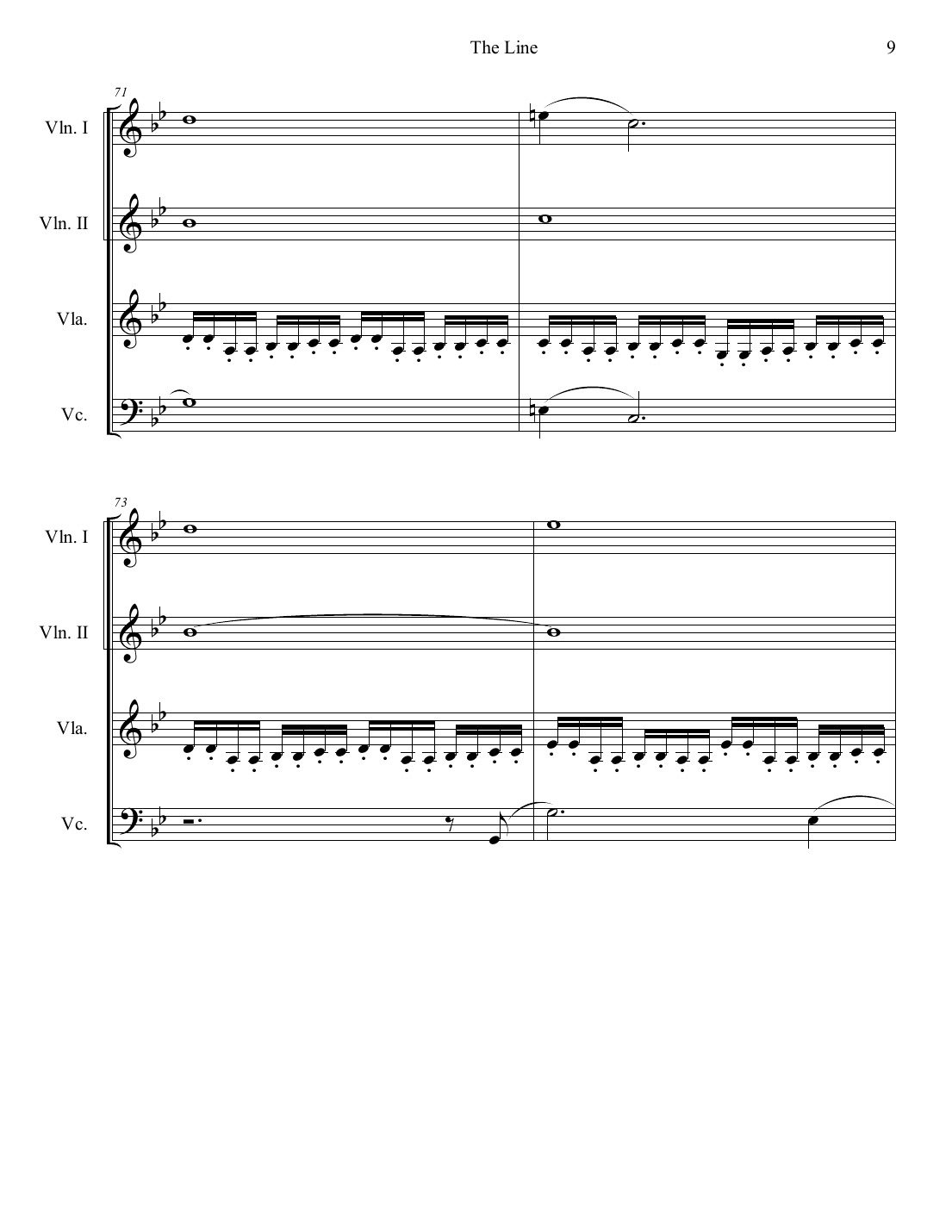
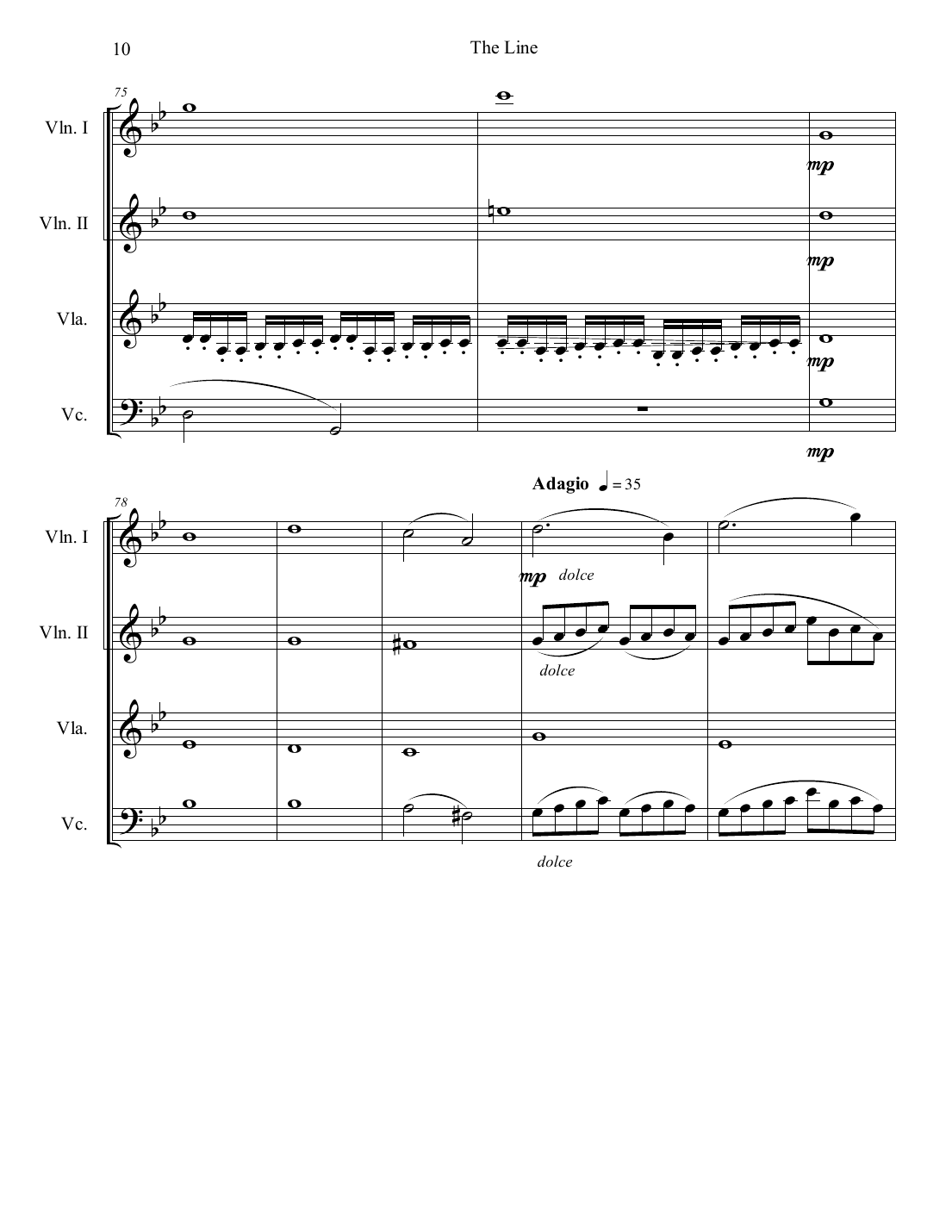
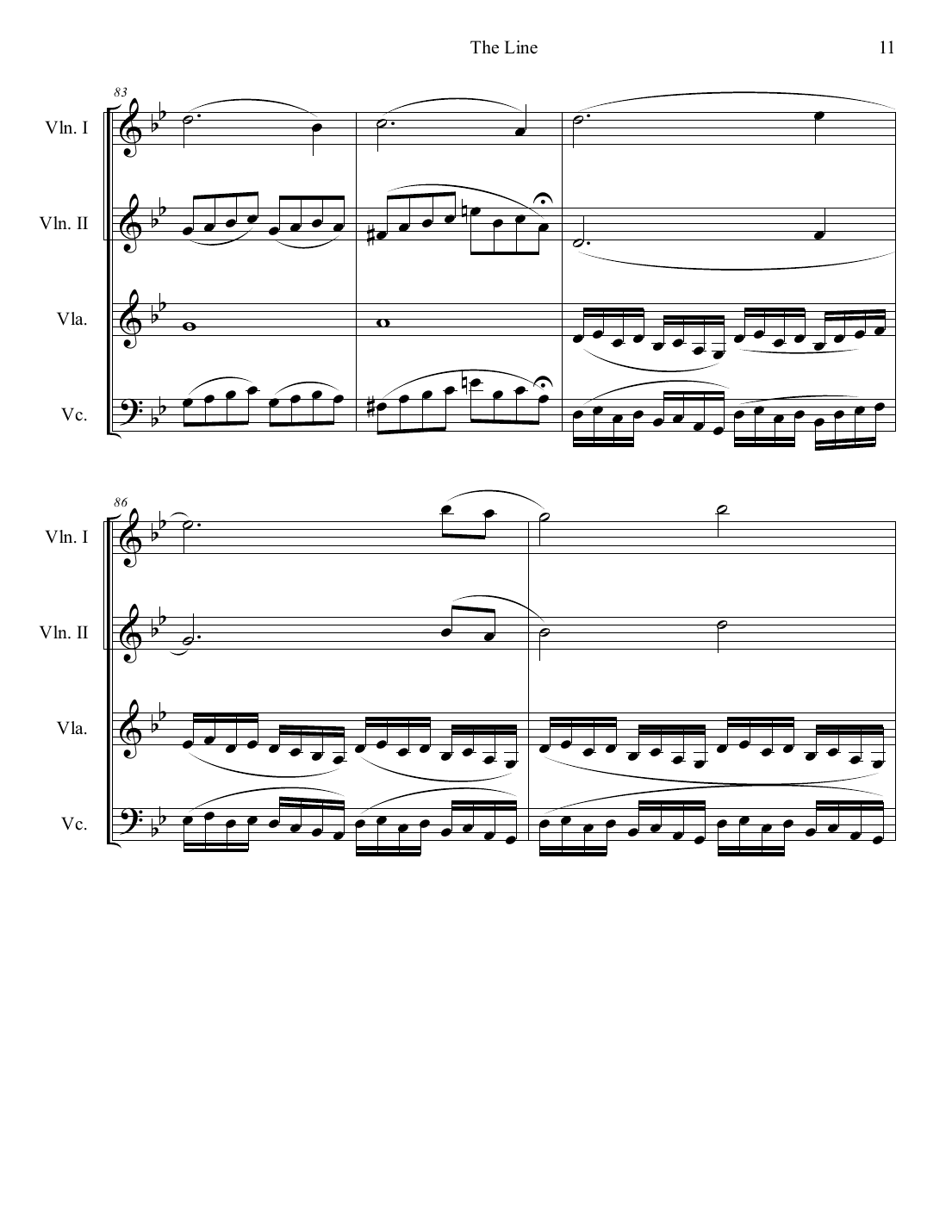
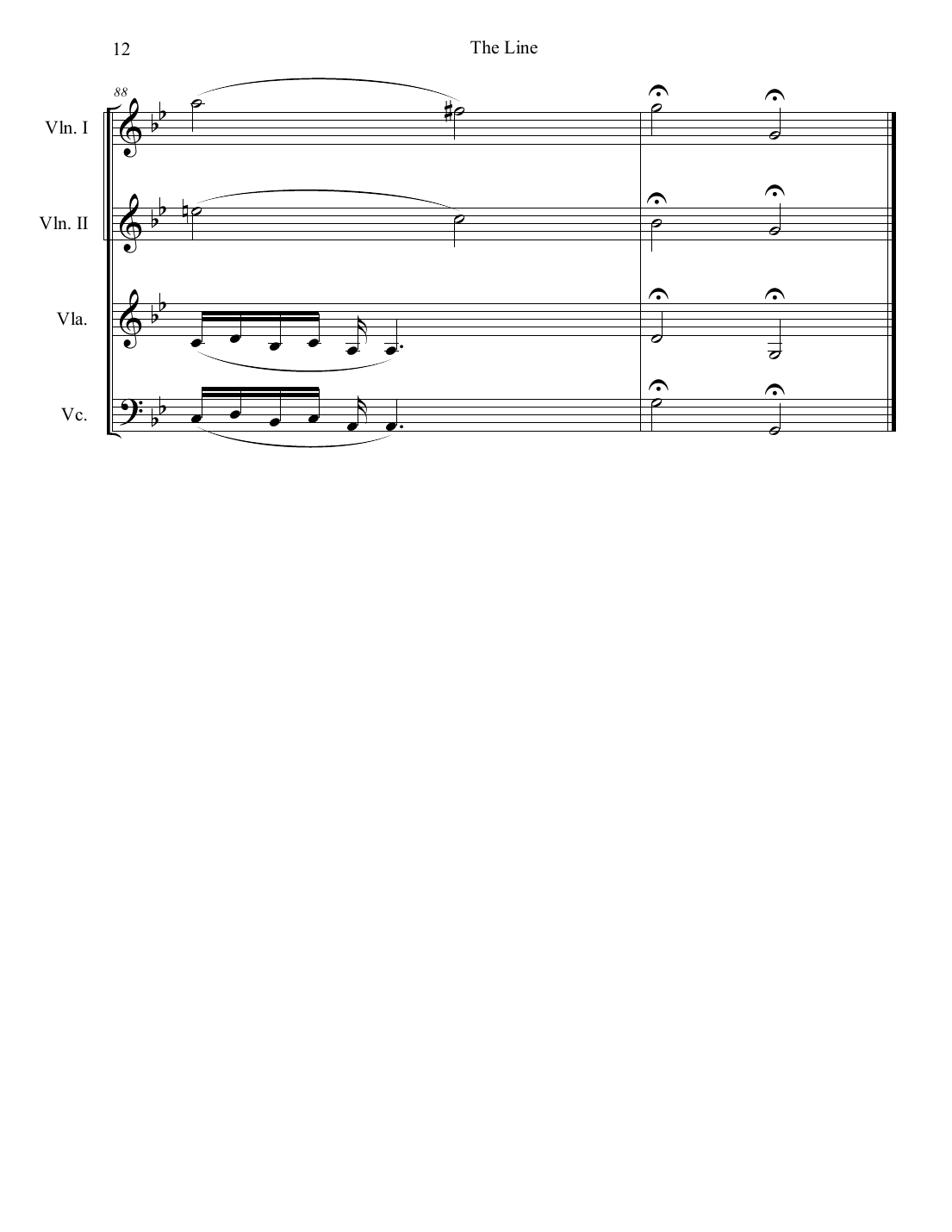
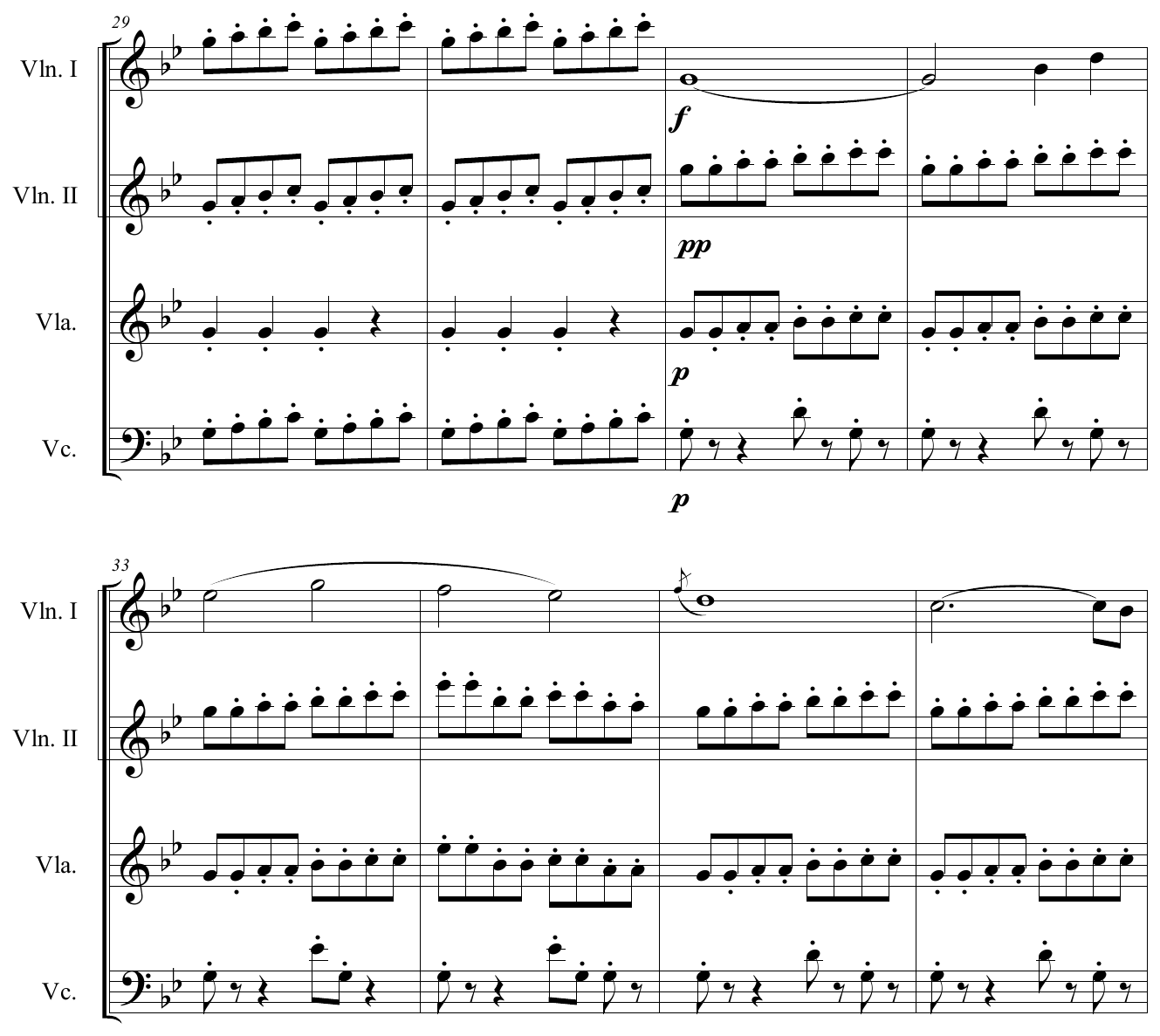
It turns up all through the score to keep the music moving, like a hull working through the swell. In the Breaking the Line string score, the second violins and violas take it up from bar 25 as the British columns close in.
It can also be pushed harder by doubling every note: G-G, A-A, B-flat-B-flat, C-C. Movement II does this at 0:43, and the ships seem to pick up speed. At 1:39 it comes back twisted and manipulated, as Victory is locked in with Redoutable and Bucentaure and can no longer sail free.
OstinatoRoot – W – H – WStaccato eighths
Duty & Fate (Kismet)
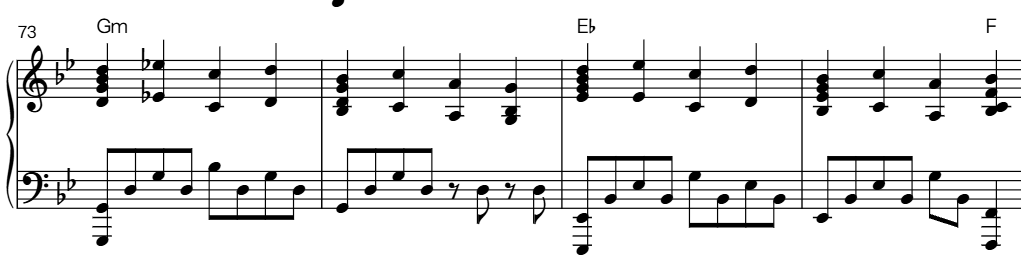
Heard at Trafalgar and at Nelson's death. A plain G minor to E-flat motion over a rocking bass line, then up to F. Duty was the word Nelson signalled to the fleet and the word he used as he died: “Thank God I have done my duty.”
G minori – VI – VII
Breaking the Line
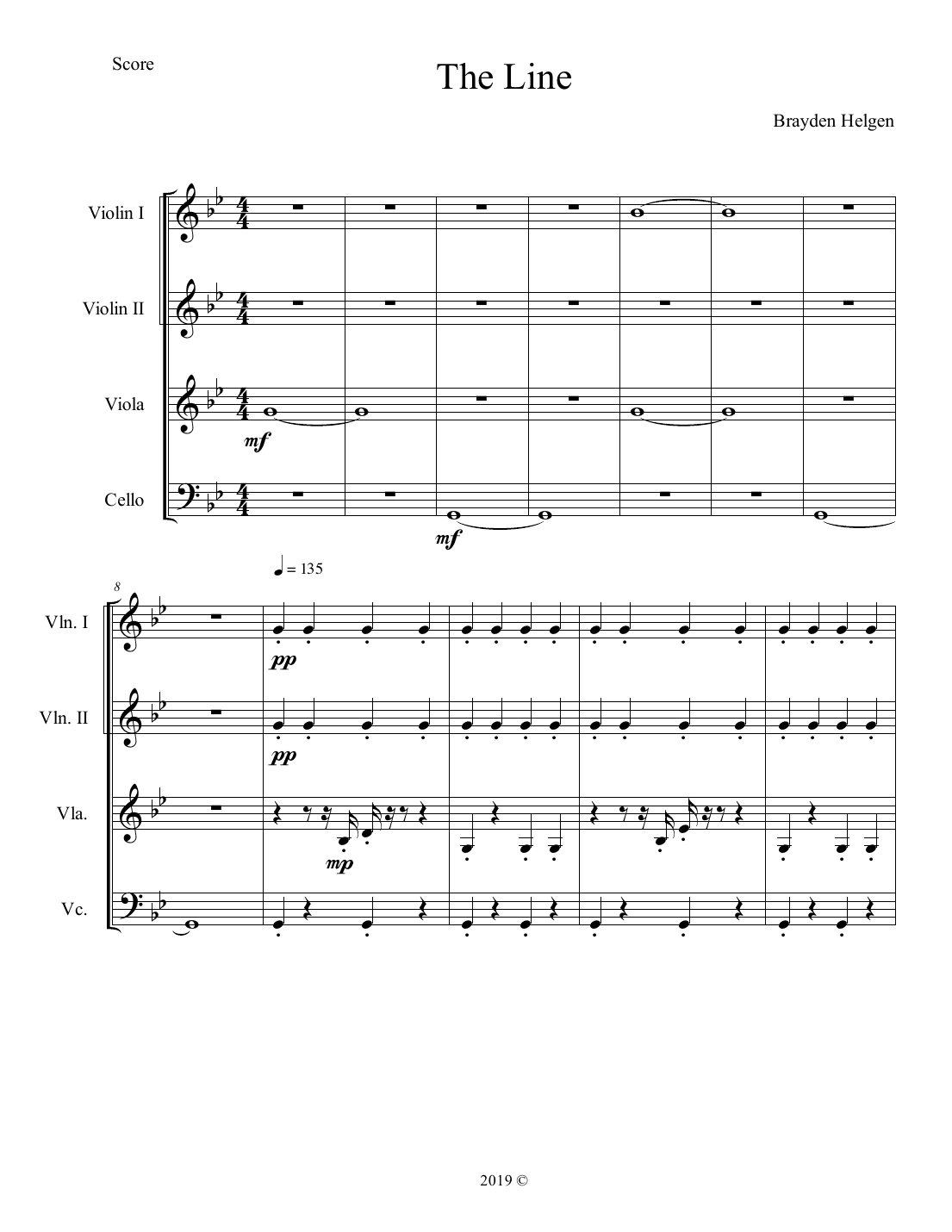
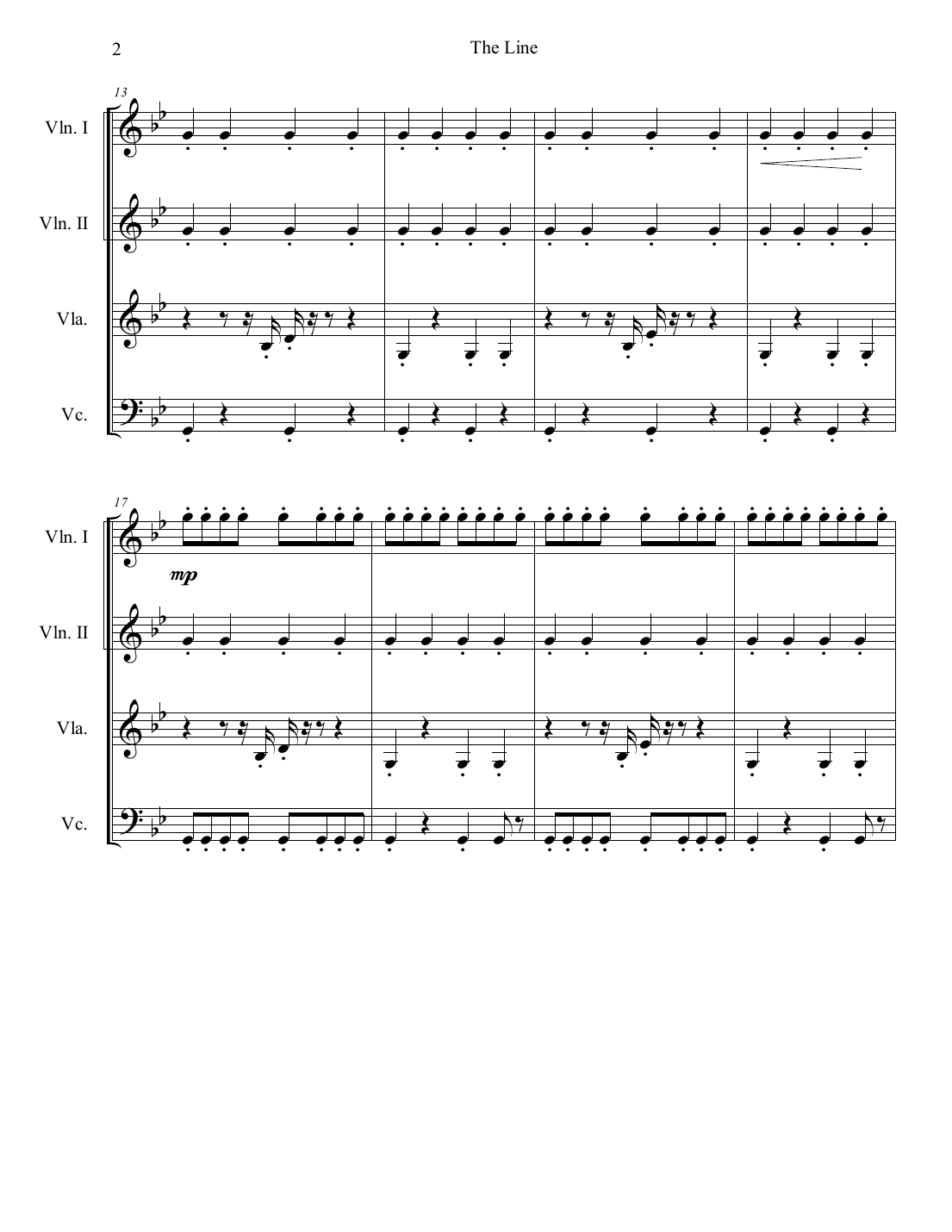
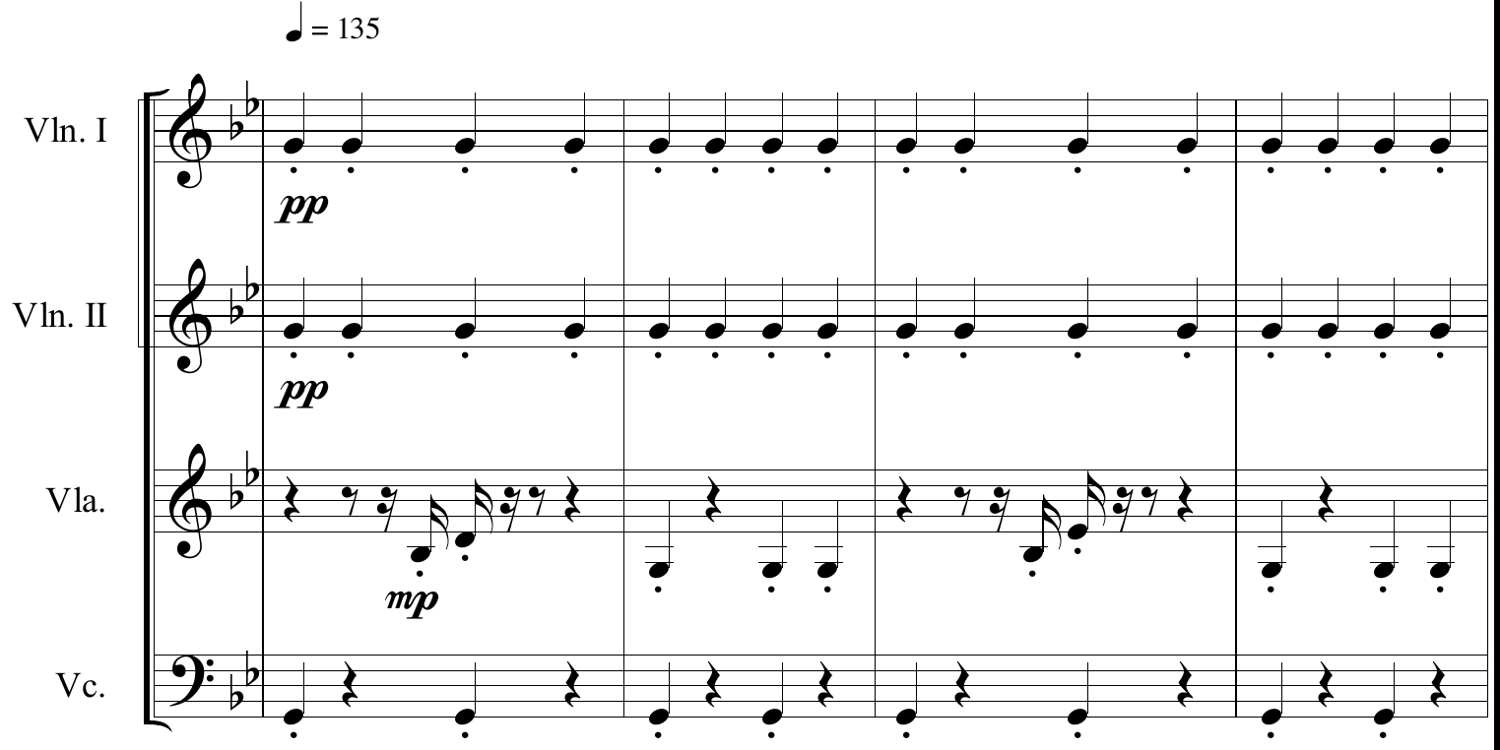
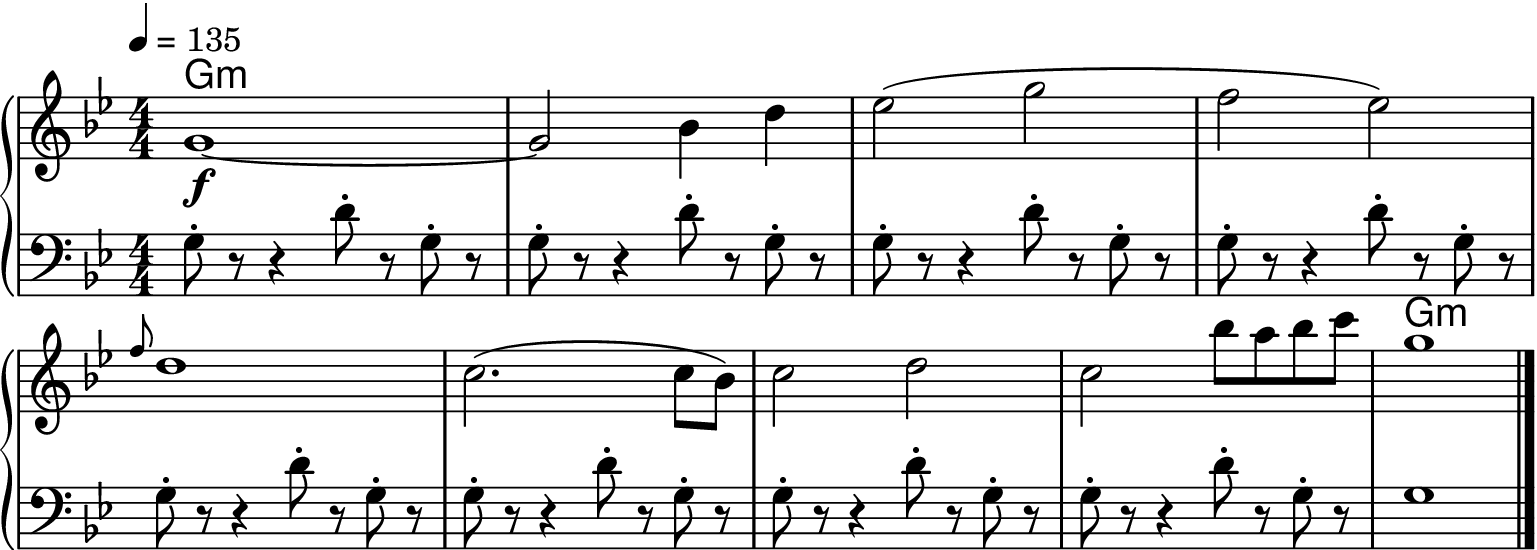
The theme that opens Movement II, written for strings. Shown here are bars 9 to 12, where the ostinato takes hold: both violin parts tap a quiet staccato G, the viola flicks upward and answers off the beat, and the cello pulses G underneath. It builds bar by bar as the British columns bear down on the enemy line.
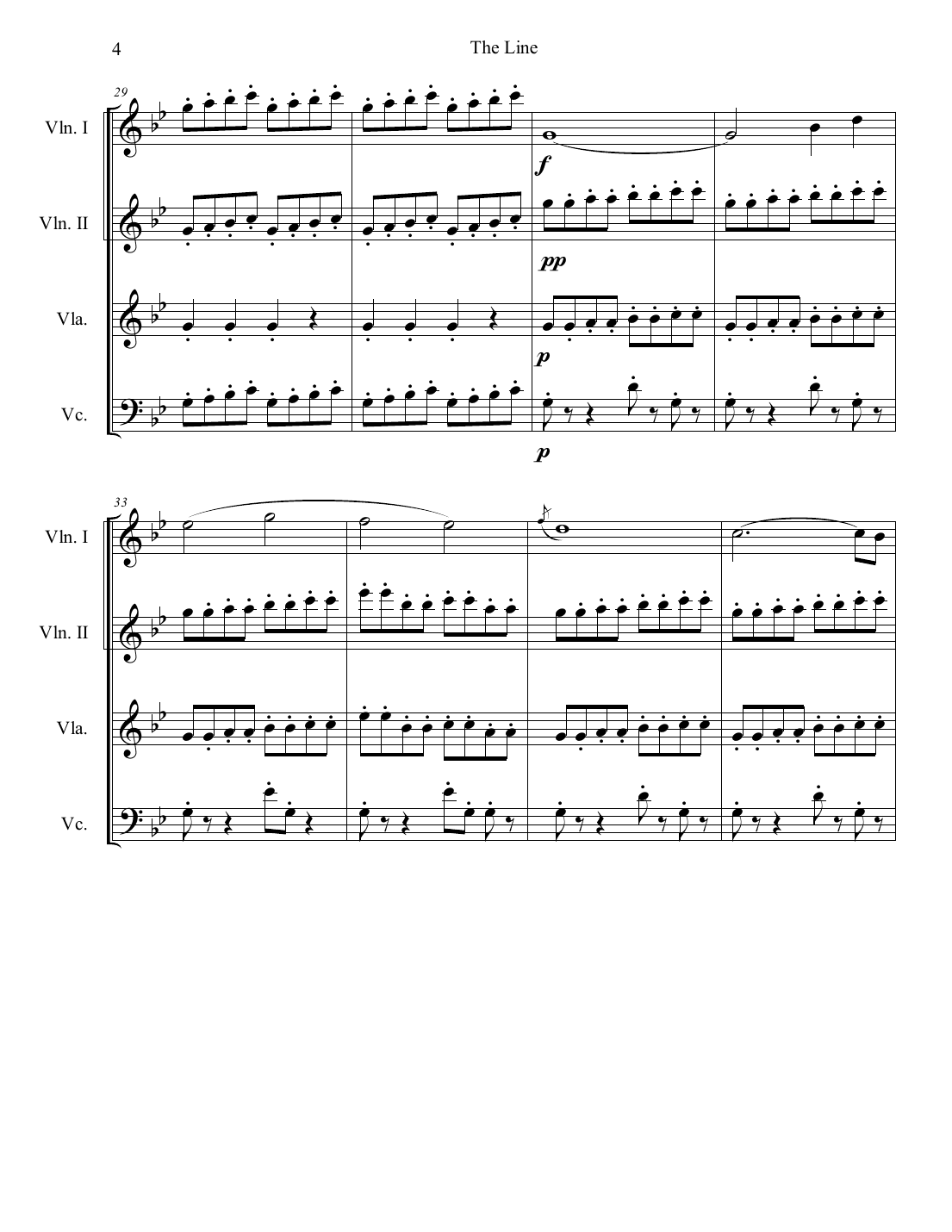
At full strength the melody enters forte in the first violins: a long G that climbs through B-flat and D to a high G, falls back to D, and then reaches up again. Under it the cellos never leave G.
From the string score of The Line, bars 9–12.
The arrangement is for string quartet, written for the 2019 multitrack recording.
G minor♩ = 135StringsG pedal
The melody, simplified: Violin I, bars 31–39
String score: The Line, bars 29–36
Bar 31: the first violins enter forte with the melody, while the second violins and violas keep the Sailing ostinato turning underneath.
The Royal Marines
The redcoats of the fleet. The theme belongs to the Royal Marines as they go into the fight, and it arrives early in the Nelson score. It was first written for snare drum and piccolo, the sound of redcoats and marching music.
It often works by call and response, one group of instruments answering another, so that a single line sounds like a multitude of soldiers.
Snare & piccoloMarchCall and response
The French Theme (Napoleon)
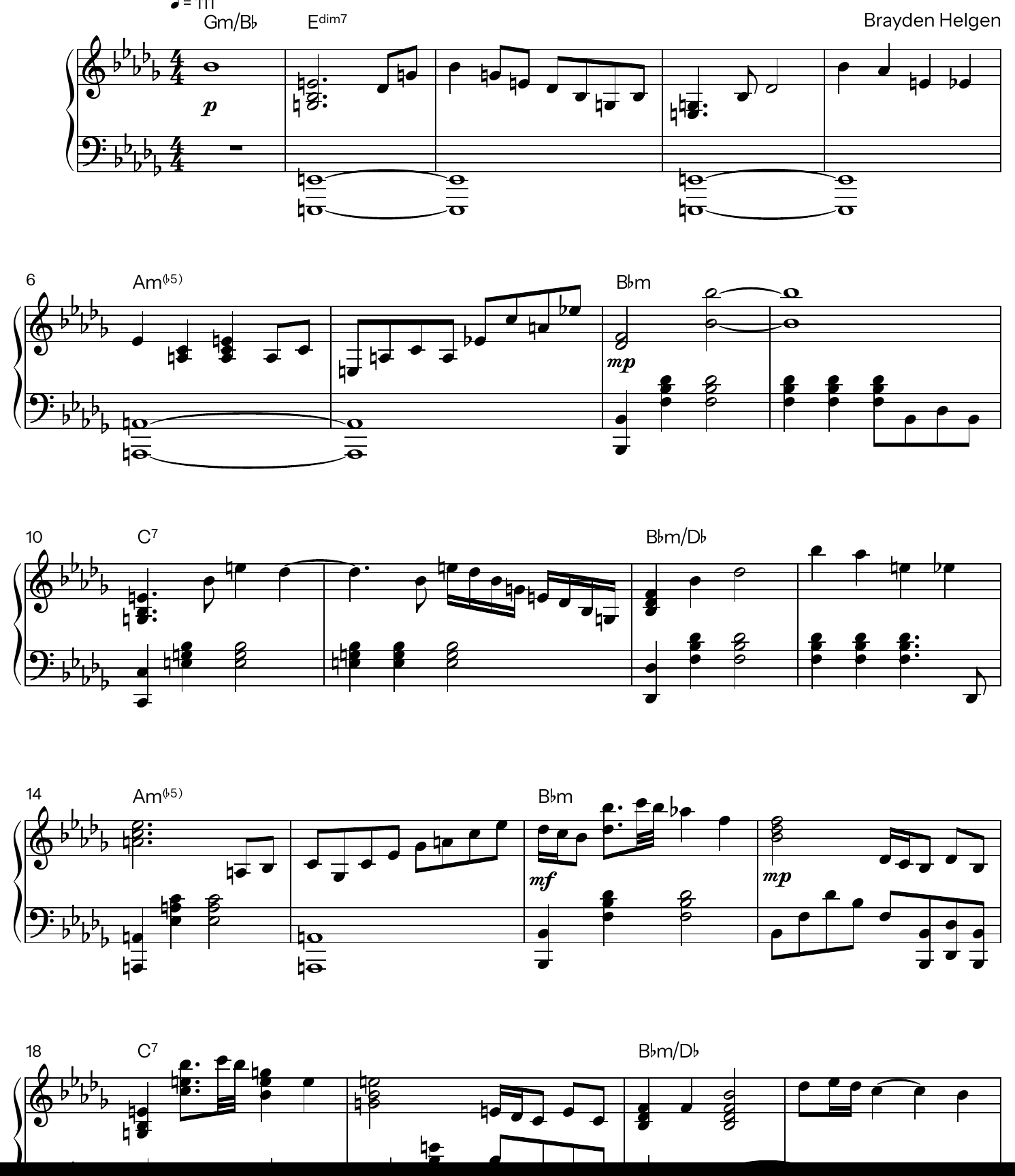
France, and Napoleon behind it. The theme is built on the tritone, the “Devil's Interval,” from B-flat to E, two notes that do not belong together. To British eyes, revolutionary France and its sudden genius of an emperor were a threat to the order of Europe, and the interval carries that unease.
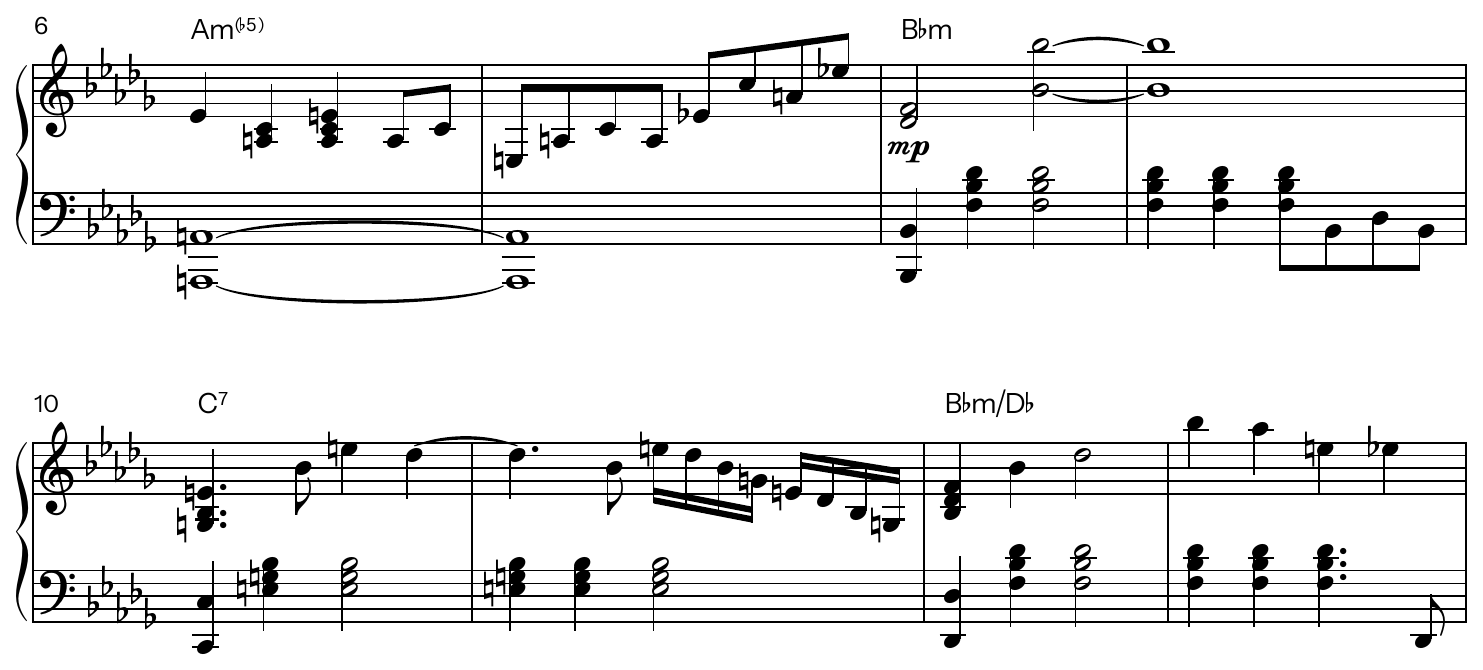
Under the melody, the theme turns on one cycle of chords: A half-diminished, a half step below home, then B-flat minor, C7, and B-flat minor over D-flat. That cycle runs through Movement I.
B♭ minor♩ = 111i – II7 – i⁶ – viiø
Piano score: Napoleon – French Theme, bars 1–21
Villeneuve
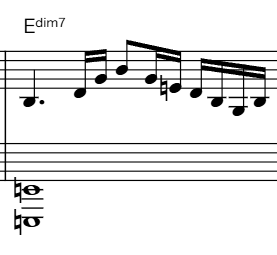
The French admiral, commander of the Combined Fleet. His theme comes from the second half of the French theme: its Devil's Interval, the tritone from B-flat to E. Orchestrated, it sits on E diminished, against B-flat minor, C7 or A minor. It is usually given to the clarinet, a nod to his French roots, and it is heard as the battle opens.
E°7B♭ – E tritoneClarinet
The Spanish Theme
Written to feel massive, like Spain's huge ships of the line. It is a slowly rising diminished scale in B-flat minor, a key chosen so it blends with the tritones of the French theme. It is kept low, in the bass clef, as a sign of Spain's role as Napoleon's junior partner. Its first four bars appear in the score as early as the San Juan expedition, where it marks the danger of the Spanish-held Caribbean. At Trafalgar, the violins play its four opening notes at the very start of Movement II, as the British close on a line full of Spanish ships.
B♭ minorBass clefRising diminished